Healthcare Legislation News - Uzbekistan – September 2025
The President of the Republic of Uzbekistan issued Decree No. UP-137 dated August 19, 2025, "On Additional Measures for the Regulation of the Circulation of Medicines and Medical Devices".
On August 23, 2025, Presidential Decree No. UP-137 of the Republic of Uzbekistan (hereinafter referred to as the “Decree”) entered into force. The Decree introduces significant amendments to the procedures governing the circulation of medicinal products (hereinafter referred to as “Medicines”) and medical devices (hereinafter referred to as “Devices”). It substantially revises the rules for their registration and certification. Below is our overview of the key legal changes introduced by the Decree.
Amendments to the Procedure for State Registration of Medicines and Devices
Effective October 1, 2025, Medicines registered by the following foreign regulatory authorities shall be subject to state registration in the Uzbekistan through a recognition procedure:
- Regulatory authorities included in the WHO Listed Authorities as of August 19, 2025;
- Regulatory authorities assessed as having Maturity Level 4 under the Global Benchmarking Tool of the World Health Organization (hereinafter referred to as “WHO”).
Starting from January 1, 2026, both domestic and foreign manufacturers will be required to obtain a national Good Manufacturing Practice (GMP) certificate in order to apply for state registration of Medicines or renew the validity of an existing registration certificate (an exception to this rule applies to Medicines that have undergone WHO prequalification and are subject to state registration through recognition). At the same time, market participants are concerned whether this requirement can be met within the specified timeframe.
Following the state registration of Medicines and Devices, domestic and foreign manufacturers are issued a registration certificate valid for five years. Furthermore, previously issued perpetual registration certificates for domestic manufacturers will now be subject to a five-year validity period, effective from the date the Decree enters into force.
Starting from January 1, 2026, all medical products and equipment in Uzbekistan will be subject to mandatory registration as Devices, with classification based on four levels of risk. Registration will be granted only upon obtaining positive results from clinical trials.
Amendments to the Certification Procedure for Medicines and Devices
When applying for a certificate of conformity for Medicines and Devices, the following requirements will apply:
- For Medicines: Starting from January 1, 2027, manufacturers must hold a national GMP certificate corresponding to the specific type of medicine.
- For Devices: Starting from July 1, 2027, manufacturers must hold a certificate of conformity with the national ISO:13485 standard.
However, the above certification requirements do not apply to:
- Orphan Medicines and Devices, as well as those used for the prevention of especially dangerous infections;
- Devices that are not subject to mandatory certification;
- Medicines and Devices that have undergone WHO prequalification (the international WHO procedure, which includes product dossier review and an audit of manufacturing for compliance with good manufacturing practice rules);
- Medicines and Devices registered through recognition procedures.
Licensing Requirement for Retail Sale of Devices are cancelled
The requirement to obtain a license for the retail sale of Devices is abolished. This activity will now be carried out by notifying the authorized body, rather than through a licensing procedure. However, this provision will take effect only after relevant amendments are made to the Law of Uzbekistan “On Licensing, Permitting, and Notification Procedures.”
Planned Measures for Regulating the State Registration of Medicines and Devices
By October 2025, the development of a new regulatory legal act governing the procedure for state registration of Medicines and Devices is expected to be completed.
The document is anticipated to introduce:
- Priority registration mechanisms for certain categories of Medicines;
- A revised procedure for extending the validity of registration certificates;
- Provisions allowing the import of orphan drugs, medical products, and diagnostic and treatment tools for especially dangerous infections upon request from the Ministry of Health, without mandatory state registration.
By September of this year, amendments to the Law of Uzbekistan “On Medicines and Pharmaceutical Activities” are expected to be introduced. Among the key changes is the provision allowing the import of Medicines and Devices manufactured during the validity period of their state registration certificate for up to 180 calendar days after its expiration.
The digitalization of registration procedures and intellectual property protection is becoming a key focus of ongoing reforms. In this regard, a technical guideline is being developed to integrate the information system of the Pharmaceutical Safety Center with the Ministry of Justice’s e-government portal.
The document will regulate:
- Data exchange on legal documents (patents, certificates, agreements);
- Information sharing on violations of intellectual property rights related to Medicines and Devices.
Implementation of this measure is scheduled for December 2025.
Planned Measures for Organizing International Clinical Trials and Evaluating Generics in Uzbekistan
By September 2026, Uzbekistan plans to implement a practical initiative to develop a strategy for organizing international clinical trials within the country. The strategy includes engaging international organizations specializing in clinical research (Contract Research Organizations), including the direct signing of an agreement with IQVIA (USA).
As part of this initiative, the following measures are planned:
- Updating the regulatory framework to incorporate international standards such as Good Clinical Practice (hereinafter referred to as “GCP”) and the guidelines of the International Council for Harmonization (hereinafter referred to as “ICH”);
- Training of personnel and certification in accordance with GCP standards;
- Establishment of digital infrastructure, including a clinical trials registry and an electronic informed consent system;
- Preparation of clinical centers and laboratories for international accreditation;
- Development of mechanisms to attract international sponsors, donor organizations, and investors.
To support a scientifically grounded approach to the evaluation of generics, a regulation on conducting clinical trials to assess pharmacokinetic bioequivalence and evaluate their results is being developed. The draft departmental regulatory act is scheduled for completion by December 2025.
The initiative also includes collaboration with:
- International organizations such as WHO and ICH;
- Regulatory authorities, including the U.S. Food and Drug Administration (FDA) and the European Medicines Agency (EMA);
- Foreign accredited centers conducting bioequivalence studies.
By November 2028, Uzbekistan also plans to establish a bioequivalence testing laboratory within the Tashkent Pharma Park pharmaceutical cluster, with funding from preferential loans provided by the South Korean Economic Development Cooperation Fund (EDCF).
Planned Measures for Regulating the Circulation of Food Supplements
According to Annex No. 1, a draft regulatory act is planned to regulate the circulation of food supplements (hereinafter referred to as “FS”). This act will establish a list of substances prohibited for use in the manufacturing of FS and introduce stricter liability measures for the manufacture, import, storage, sale, and advertising of substandard or counterfeit products.
Nonetheless, uncertainties remain regarding certain practical aspects of implementing the new requirements, particularly the mandatory possession of a national GMP certificate starting from January 1, 2026. These issues require further clarification from regulatory authorities to ensure a smooth transition to the new rules without compromising the availability of essential medicines.
Contacts:
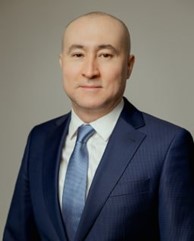 |
Zafar Vakhidov
Partner, Vakhidov & Partners Kazakhstan/Uzbekistan |
|
|
Kamila Sharipova
Senior Associate, Vakhidov & Partners Uzbekistan KamilaSh@vakhidovlaw.com |